Introduction to Extracorporeal Life Support (ECLS)
Extracorporeal Life Support (ECLS) represents a vital intervention used in critical care settings for patients experiencing severe cardiac or respiratory failure. The main purpose of ECLS is to temporarily provide support to the heart and lungs, enabling patients to recover from life-threatening conditions while facilitating ongoing medical treatment. This technique comes into play when conventional therapies, such as mechanical ventilation or pharmacological support, prove inadequate.
The ECLS system consists of several key components that work in concert to sustain life. At its core, this system typically includes a pump for blood circulation, an oxygenator to facilitate gas exchange, and a series of tubes and cannulas to connect the ECLS equipment to the patient. The blood is drawn from the body through a venous cannula, passed through the pump which forces it through the oxygenator, and then returned to the body via an arterial cannula. This cycle is critical in enhancing oxygen delivery and removing carbon dioxide, effectively sustaining life while the underlying cause of the organ failure is addressed.
Understanding the physics of blood flow within this system is crucial for clinicians working with ECLS. The mechanics involved in ECLS encompass various factors such as blood viscosity, flow rates, and pressure gradients. For instance, optimal flow rates are essential to ensure sufficient oxygenation without damaging blood cells. Each component’s functionality directly impacts the overall efficiency of the ECLS process.
The terminology surrounding Extracorporeal Life Support is integral to understanding its application. Terms such as “veno-venous ECMO” or “veno-arterial ECMO” categorize the procedure based on the access sites and the specific clinical scenario. These distinctions are fundamental when assessing patient suitability for ECLS, determining the appropriate setup, and planning the course of treatment.
In summary, Extracorporeal Life Support is a complex yet life-saving intervention that plays a pivotal role in the management of critically ill patients with severe cardiorespiratory dysfunction. The following sections will delve deeper into the application, benefits, and advancements within ECLS technologies.
Understanding ECMO Flow Dynamics
Extracorporeal Membrane Oxygenation (ECMO) plays a critical role in the management of patients with severe cardiac and respiratory failure. At the heart of this advanced life-support system is the concept of flow dynamics, which pertains to the movement of blood through the ECMO circuit. The effective performance of ECMO largely hinges on an understanding of how flow rates relate to the cardiac output and the physiological demands of the patient.
In ECMO, flow rates are typically controlled to maintain adequate oxygenation and tissue perfusion. The relationship between ECMO flow rates and cardiac output is complex; higher flow rates can significantly enhance oxygen delivery to the tissues, provided that the patient’s heart is still capable of contributing to overall perfusion. However, it is essential to monitor and adjust flow rates carefully, as excessive rates can lead to complications such as hemolysis or decreased systemic vascular resistance.
Moreover, the impact of flow dynamics extends beyond just the ECMO circuit and cardiac output. The interaction of venous and arterial systems within the ECMO setup is critical. The venous return, which refers to the amount of blood returning to the ECMO circuit, must be optimized to ensure that the system functions effectively. Changes in venous return can significantly affect the adequacy of perfusion and oxygenation, ultimately influencing patient outcomes. Additionally, during ECMO support, the arterial system may experience altered hemodynamics, affecting blood pressure and flow patterns.
It is also noteworthy that the settings on the ECMO machine, such as pump speed and cannula size, can influence flow dynamics. Proper cannulation technique is imperative to minimize flow resistance and maximize blood flow rates. An in-depth examination of these parameters provides vital insights necessary for enhancing patient care during ECMO therapy.
Cardiac Output and Mixing in VV ECMO
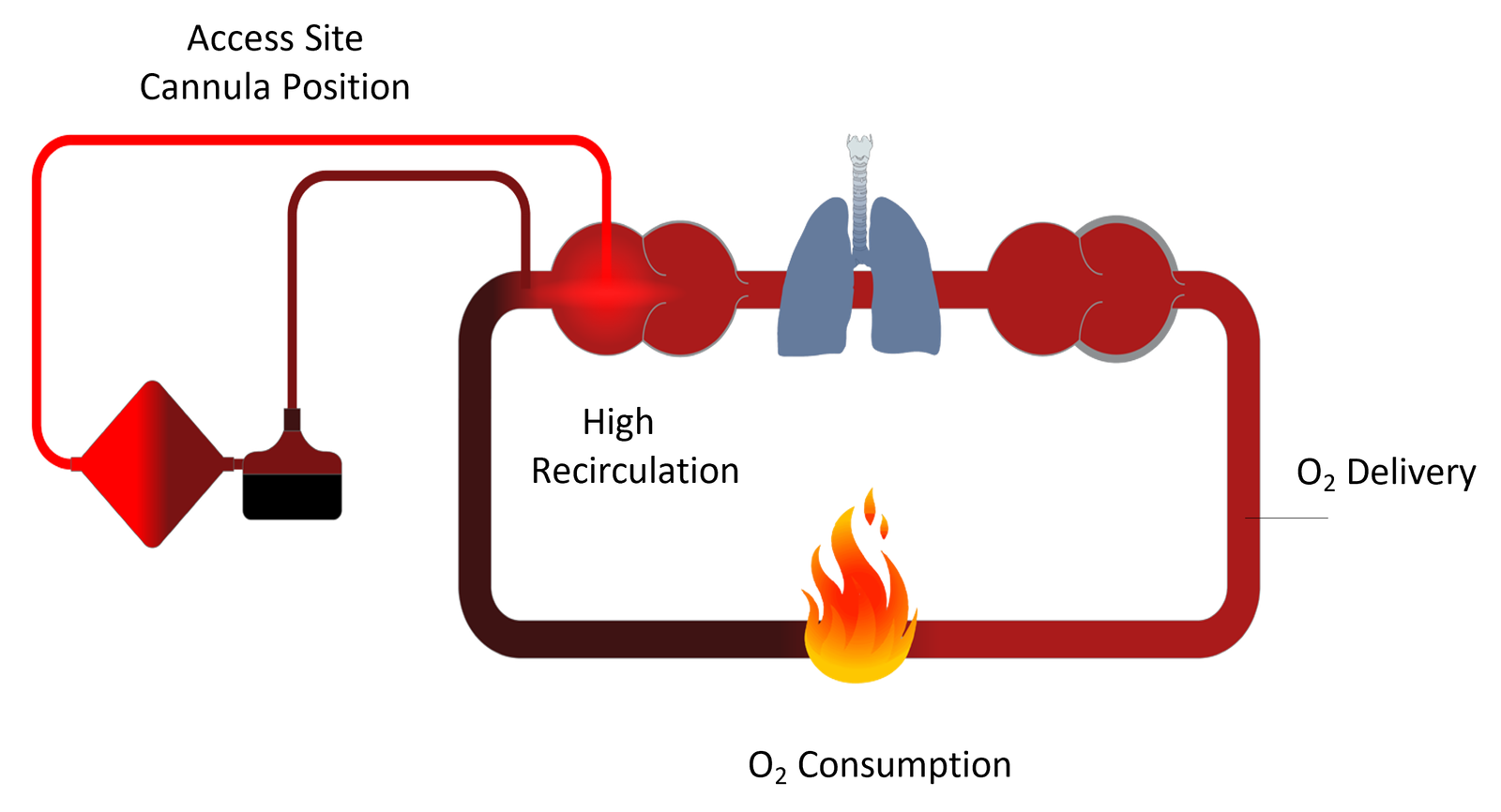
Venovenous (VV) extracorporeal membrane oxygenation (ECMO) serves as a vital support system for patients with severe respiratory failure. A critical aspect of the VV ECMO circuit is the interaction between the blood being returned to the patient and the blood being drained from the venous system. This mixing process significantly impacts the overall cardiac output and, consequently, the oxygen delivery to tissues.
During VV ECMO, venous blood is extracted from the patient, oxygenated externally using a membrane oxygenator, and subsequently returned to the venous circulation. The mixing of the oxygenated blood with deoxygenated blood occurs within the circuit and depends on several factors, including pump speed, cannula placement, and patient hemodynamics. The dynamics of this mixing can lead to variable oxygen saturation levels in the returning blood, which may influence overall cardiac output, particularly in patients with compromised cardiovascular function.
Moreover, inadequate mixing may result in hypoxemia, thereby complicating the management of patients undergoing VV ECMO. Achieving optimal flow rates and ensuring that the oxygen-enriched blood is effectively mixed are critical considerations when aiming to enhance oxygen delivery to peripheral tissues. The placement of cannulae is also crucial, as it should favor the efficient mixing of blood in the right atrium, where venous return predominately occurs.
Clinicians must be vigilant regarding the potential complications that could arise from suboptimal mixing and flow. Ensuring that blood is adequately oxygenated and relies on a thorough understanding of hemodynamics, cannulation strategies, and individualized circuit management. Continuous monitoring of parameters, such as mixed venous oxygen saturation and systemic blood pressure, is essential in optimizing ECMO flow during treatment. This comprehensive approach will enable healthcare professionals to enhance the efficacy of VV ECMO and improve patient outcomes.
Impact of ECMO on Systemic Oxygenation
Extracorporeal Membrane Oxygenation (ECMO) is a critical intervention utilized for patients with severe cardiac and respiratory failure. Understanding the flow dynamics within an ECMO system is essential for optimizing systemic oxygenation, which can significantly impact patient outcomes. The flow dynamics influence how effectively blood can be oxygenated and subsequently delivered to the tissues, playing a pivotal role in systemic oxygenation.
In clinical practice, the relationship between ECMO flow rates, cardiac output, and systemic oxygenation must be carefully monitored and adjusted. For instance, low flow rates may lead to inadequate oxygen delivery to the patient, which can compromise organ function. Conversely, excessively high flow rates may result in increased shear stress on blood components, leading to potential hemolysis. Both scenarios can adversely affect the overall oxygenation status of the patient.
Clinical scenarios often reveal the critical nature of these flow dynamics. For example, in patients suffering from severe pneumonia treated with ECMO, maintaining an optimal flow rate is vital for enhancing systemic oxygenation. During this process, clinicians must assess the impact of ECMO settings on cardiac output. In cases where cardiac output is diminished, adjustments to ECMO parameters can help improve systemic oxygenation, enhancing organ perfusion and patient stability.
Strategies for monitoring these parameters include regular assessments of blood gases, oxygen saturation levels, and hemodynamic stability. Furthermore, advancements in technology provide real-time data on ECMO performance, allowing clinicians to make informed decisions quickly. Adjusting parameters such as blood flow rates and gas exchange settings becomes essential in optimizing patient outcomes.
In conclusion, the interplay between ECMO flow dynamics and systemic oxygenation is critical to patient management. By carefully monitoring and adjusting ECMO settings, healthcare professionals can significantly improve oxygen delivery to tissues, thereby enhancing overall clinical outcomes for patients requiring this life-sustaining therapy.